▪ Ethylene ▪ Strigolactone ▪ Gibberellin ▪ Brassinosteroid ▪ Abscisic Acid ▪
Hormone
Auxin (IAA)
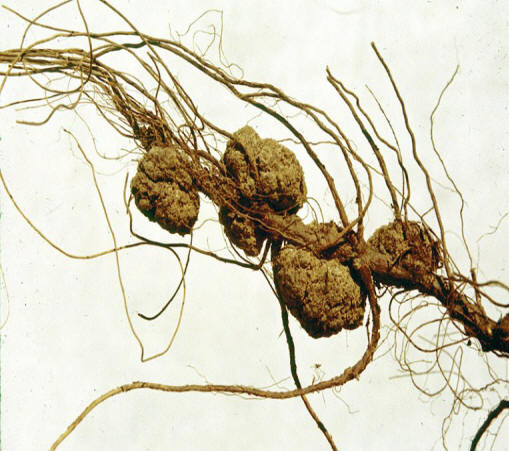
Crown galls are caused by Agrobacterium tumefaciens
bacteria; they produce and excrete
auxin and cytokinin
and I argue Salicylic acid and Jasmonic acid, which
interfere with normal cell division and cause largely
undifferentiated calluses of cells -
A Wikimedia Image
(Caption is also partially from Wikipedia - see
here
)

Chemical Structure

Indole-3-ylacetic Acid, the most common auxin -
A Wikimedia Commons Image

Speculative Overall Role
Oxygen deficiency signal.
What is auxin's speculative complementary deficiency signal?
Ethylene
If overall speculative role is true, what should auxin's affect be on synthesis?
Well-aerated plants should have high IAA levels, anoxia treated plants should have low levels. IAA should be mostly made in meristematic cells and much less so as cells mature. IAA should be made when a cell has more than enough oxygen to support both it any cell dependent on it for oxygen acquisition. Thus IAA is always an indication that growth amounts of oxygen are being procured by the plant and if conditions warrant, that the plant has enough oxygen to grow at least in the specific cell where the IAA is. (Shoot cells are responsible for acquiring oxygen for both it and some of the oxygen for a similar size cell in the root. Whereas a root cell is only responsible to itself for it own oxygen level and may even obtain some oxygen from spaces between soil particles).
If overall speculative role is true, what should auxin exogenous treatment produce?
Should induce ethylene, because IAA up regulates various processes limited by oxygen. Exogenously applying IAA leads the plant to falsely believe that it has high levels of oxygen, thus engaging all sorts of reactions that use O2, thus further depleting what may simply be a homeostatic level of existing O2 and moving this level into the deficiency range.
If overall speculative role is true, what should auxin inhibit and stimulate?
Should induces new root growth, just like JA. Especially if JA is also present, IAA should inhibit shoot growth because high JA and IAA levels are an indication of at least a short term lack of need to expand the shoots.
If overall speculative role is true, how should auxin affect storage?
Should cause O2 to be stored in proteins and sequestration methods for less propitious times.
If overall speculative role is true, how should auxin be transported?
May be expected to travel in the direction of the shoots, away the region lowest in O2, mainly the roots. As it travels up to the leaves it may actively send oxygen in the opposite direction.
If overall speculative role is true, how should auxin affect nutrient attraction and repulsion?
Should attract all nutrients and abundance hormones/signals to a cell and repel deficiency hormones/signals.
If overall speculative role is true, how should auxin affect apical dominance?
Should induce shoot apical dominance along with JA, however the possibility exists for two dominant apices if one is particularly good at sugar production (in the light) and one good at oxygen harvesting (in the wind). May break root apical dominances under conditions of low CK and SA.
If overall speculative role is true, how should auxin affect Cell Division?
Along with cytokinin and JA and Salicylic acid, IAA should be necessary for cell division. If there are some plant callus lines that will divide with only auxin and cytokinin present it is because these cell lines are mutants that produce SA and JA natively. Alternatively these latter two hormones are unknowingly being included with "other" nutrients/vitamins that are also added to calluses to get them to divide.
If overall speculative role is true, how should auxin affect Senescence
Should protect plant tissue from senescence, particularly root tissue.
If overall speculative role is true, how should SA effect growth directions to provide balance in the plant?
Auxin is known to generally lengthen plant parts, complementing it's deficiency partner, ethylene's broadening of plant parts.
Proven Synthesis and Transport
-
Made mostly in meristematic cells of the shoot and root decreasing as cells mature and age. 34 35 Why this makes sense - Under construction...
-
More is made in the shoot meristem than the root. 34 35 Why this makes sense - All the abundance signals are indications that certain meristems are worth sending nutrients to, e.g. investing in, and the strongest candidate in many species wins out to the exclusion of all others. Although possibly there is one dominant shoot apex for all four nutrient groups, water, minerals, sugar and gases making a total of four apices. Perhaps most of the time, the mineral and water apex and the sugar and gas apices are the same making two dominant apices, one for the root and one for the shoot.
-
Overall levels of auxin peak during the day. 36 Why this makes sense - like the other three abundance signals, excess "growable" amounts of nutrients, is more likely during the day when transpiration and photosynthesis are their peaks than at nights when nutrient stores are tapped to continue supporting life.
-
An internal gradient within the ovary effects the development of the of the embryo. 44 46 Why this makes sense - auxin appropriately induces new roots and cytokinin induces new shoots. So if one end of the embryo is high in auxin, that end will become the root. If the other end is high cytokinin, that end will become the shoot.
-
The developing seed releases auxin, stimulating fruit growth. 44 47 Why this makes sense - ?
Proven Effects
-
Auxin induces new adventitious root development and growth. 33 Why this makes sense - auxin induces new root growth to complement oxygen abundance. Since oxygen is mostly taken in by the leaves, abundance of it shifts growth away from the leaves to roots.
-
Involved in shoot and root phototropism. (The Cholodny-Went theory). 37 Why this makes sense - ? This doesn't make a lot of sense from the theory. Maybe phototropism is due to local relative paucity of oxygen because photosynthesis is using up O2. Therefore relatively speaking auxin will be higher in shaded sections of the root and shoot rather than that portion exposed to the sun. In the root the shaded excess of auxin leads to ethylene evolution and the relative inhibition of growth of the shaded section versus the one exposed to light.
-
May mediate positive root and negative shoot gravitropism. 38 50 Why this makes sense - perhaps the starch granules used to measure gravity are partly hydrolyzed and metabolized within the cells, leading to local oxygen depletion on the undersides of the cells in the roots and relative auxin abundance on the tops of the cells growing the cells down. In the shoots, the same thing happens but the relative
-
Induce xylem differentiation. 39 Why this makes sense - Opposite of what is expected, unless xylem somehow allows for oxygen transport down even though water at the same time is being transported up. However, maybe xylem differentiation may be to bring up water and minerals to complement the oxygen indicated by auxin and the sugar indicated by JA.
-
Auxin in concert with GA induce phloem differentiation. 32 Why this makes sense - this perhaps would make more sense if auxin were a sugar abundance signal. However an abundance of oxygen may be an indication of a lot photosynthesis having taken place, hence the need for removal of the sugar to where it's needed or stored.
-
Inhibits secondary buds below site of synthesis producing apical dominance. 40 41 Why this makes sense - perhaps success of the primary bud in terms of oxygen uptake and photosynthesis rates suggest against fooling with success and investing resources in new growth directions.
-
High levels of auxin induce ethylene synthesis especially in the roots. 42 Why this makes sense - since auxin is theorized to be an excess oxygen signal, perhaps it allows oxygen requiring processes such as metabolism to take place to such an extent that oxygen levels become depleted in the target tissue causing the release of the oxygen deficiency signal, ethylene.
-
Induce cell lengthening. 43 Why this makes sense - Cell lengthening requires processes require a lot of oxygen? Excess oxygen is sequestered in vacuoles, blowing a cell up like a balloon? complements ethylene's cell and tissue broadening.
-
An internal gradient within the ovary effects the development of the of the embryo. 44 46 Why this makes sense - as stated before, greater amounts of auxin would produce the root for the embryo whereas cytokinin would produce the shoot.
-
The developing seed releases auxin, stimulating fruit growth. 44 47 Why this makes sense - ?
-
Young leaves strongly attract auxin preventing new leaves from growing out of the meristem too soon. 44 48 Why this makes sense - Maybe there is a "valley" where some amounts induce hibernation of leaf growth. Apical meristem growth is perhaps stimulated by the auxin it makes because it is beyond the valley of inhibition which is caused by moderate amounts of auxin.
-
When auxin are no longer produced by leaf, this initiates leaf senescence and abscission. 49 Why this makes sense - the roles of leaves is apparently primarily to make sugar with photosynthesis, to take in oxygen and carbon dioxide and to transpire (by nick at testsforge). A leaf that is kept from senescence may need to do all four well or one more of the four extraordinarily well. Since apparently the four stimulating hormones attract each other if a leaf does not make auxin at all but only attracts it from neighboring supplies, a local synthesis may be necessary and so some oxygen uptake capabilities by a life may be necessary.
-
The Shade-Avoidance Effect. 44 51 Why this makes sense - this doesn't exactly make sense because the part of the plant exposed to sunlight would have the least amount of oxygen, since it is being used in photosynthesis. However if the location of where photosynthesis is transported to rather than where it is synthesized is important for auxin action then maybe the transport of auxin from the illuminated side to the dark side is what causes shade avoidance.
-
Auxin is integral to flower formation. Knockout auxin mutants do not flower. 44 45 Why this makes sense - ?
-
Auxin stimulates respiration. 113 Why this makes sense - increased auxin signals high oxygen thus allowing greater respiration.
-
Auxin changes carbon dioxide Levels in the Leaf. 116 Why this makes sense - increased respiration induced by auxin raises oxygen levels. Through this mechanism oxygen may regulate respiration and photosynthesis.